The Witches: A Deep Dive into the Historical and Modern Understanding
Early texts from the 1430s, clustered around the western Alps, solidified beliefs about organized heretical sects and diabolical conspiracies, shaping perceptions of witchcraft profoundly.
Origins of the “Witches” Concept
The very notion of “witches” as we understand it didn’t spring forth fully formed; rather, it evolved over centuries, coalescing from a blend of folklore, religious anxieties, and societal fears. Before the 15th century, accusations of harmful magic were generally directed at individuals practicing folk magic, not members of a coordinated, devil-worshipping sect.
However, a significant shift occurred with the emergence of texts in the 1430s, primarily concentrated in the regions surrounding the western Alps. These writings began to portray witchcraft not as isolated acts, but as participation in organized, heretical groups engaging in nocturnal gatherings – the precursors to the infamous Witches’ Sabbath.
Michael D. Bailey’s translations of these foundational texts provide invaluable insight into this crucial period, revealing how the concept of the witch transformed from a solitary practitioner to a member of a vast, diabolical conspiracy. This marked a turning point, laying the groundwork for the intense witch hunts that would characterize the Early Modern period.
The 1430s Texts and the Crystallization of Witchcraft Beliefs
The decade of the 1430s proved pivotal in solidifying the emerging beliefs surrounding witchcraft. A cluster of texts originating geographically around the western Alps began to articulate a consistent narrative: witches weren’t simply individuals practicing harmful magic, but participants in organized, heretical groups. These texts detailed nocturnal meetings, often involving demonic pacts and ritualistic practices – the nascent form of the Witches’ Sabbath.
This period witnessed a crucial shift in perception, moving away from localized accusations of maleficium (harmful magic) towards a broader, more systematic understanding of witchcraft as a coordinated threat to Christendom. Michael D. Bailey’s accessible English translations of these five oldest surviving texts are essential for understanding this development.
These writings provided a framework for subsequent witch trials and inquisitorial investigations, shaping the very questions asked and the evidence sought, ultimately contributing to the widespread panic and persecution that followed.
Michael D; Bailey’s Translations of Early Witchcraft Texts
Michael D. Bailey’s work is invaluable for modern scholars and enthusiasts seeking direct access to foundational texts concerning early witchcraft beliefs. He provides accessible English translations of the five oldest surviving documents describing the Witches’ Sabbath, offering a crucial window into the formative period of witchcraft accusations.
These translations aren’t merely linguistic exercises; they are accompanied by insightful introductions and contextualization, helping readers navigate the complex historical and theological landscape of the 15th century. Bailey also translates two contemporaneous witch trials, providing firsthand accounts of accusations and interrogations.
His contribution lies in making these previously inaccessible sources readily available, allowing for a more nuanced understanding of how the concept of witchcraft evolved. Bailey’s work facilitates critical analysis, moving beyond secondary interpretations and engaging directly with the primary sources that shaped the historical narrative.

The Witches’ Sabbath: Historical and Folkloric Roots
Kelden’s examination delves into the Sabbath’s development, tracing its historical and folkloric origins and its surprising re-emergence within contemporary Witchcraft practices.
Defining the Witches’ Sabbath

The Witches’ Sabbath, a concept central to early modern witchcraft beliefs, represented a nocturnal gathering where witches were thought to congregate and commune with the Devil. These meetings, often depicted as orgiastic and heretical, involved ritualistic practices, feasting, and the worship of Satan. The idea wasn’t simply a spontaneous imagining; it evolved through a complex interplay of folklore, theological anxieties, and legal proceedings.
Initially, descriptions were vague, but by the 15th century, a more defined picture began to emerge, fueled by confessional accounts extracted during witch trials. These confessions detailed specific locations, rituals, and even the presence of demonic figures presiding over the gatherings. The Sabbath wasn’t merely a social event; it was perceived as a direct challenge to Christian authority and a manifestation of profound evil. Understanding its definition requires acknowledging its roots in both popular belief and the pressures of religious and political persecution.
Kelden’s Examination of the Sabbath’s Development
Kelden’s in-depth examination meticulously traces the evolution of the Witches’ Sabbath from its folkloric origins to its prominent role within modern Witchcraft practices. This analysis reveals a fascinating trajectory, demonstrating how initial, fragmented beliefs gradually coalesced into a more standardized and elaborate concept over time. Kelden highlights the influence of various factors, including theological debates, societal anxieties, and the impact of sensationalized witch trial accounts.
The study emphasizes that the Sabbath wasn’t a static entity but rather a fluid and adaptable idea, constantly reshaped by cultural and historical contexts. Kelden’s work also explores the Sabbath’s surprising re-emergence in contemporary Paganism and Witchcraft, where it’s often reinterpreted as a symbol of female empowerment and spiritual liberation, diverging significantly from its earlier, demonized portrayal. This nuanced perspective offers a comprehensive understanding of the Sabbath’s enduring legacy.
The Sabbath’s Re-emergence in Modern Witchcraft
The Witches’ Sabbath, once a symbol of fear and persecution, has undergone a remarkable transformation within modern Witchcraft, experiencing a significant re-evaluation and reclamation. Contemporary practitioners often view the Sabbath not as a literal gathering with demonic forces, but as a powerful metaphor for inner work, ecstatic experience, and connection with the divine feminine. This reinterpretation actively subverts the historical narrative of demonization and control.
Modern Sabbats frequently incorporate elements of ritual drama, guided meditation, and creative expression, fostering a sense of community and empowerment. The focus shifts from fear-based accusations to celebrating the wild, untamed aspects of nature and the self. This revival demonstrates a conscious effort to reclaim a historically stigmatized practice, imbuing it with new meaning and agency, and challenging traditional patriarchal interpretations.
Visual Representations of Witchcraft
Jacques de Gheyn II’s “Witches Sabbath” and Hans Baldung-Grien’s 1510 woodcut exemplify stereotypical depictions, revealing prevalent anxieties and imagery surrounding witchcraft beliefs.
Jacques de Gheyn II’s “Witches Sabbath” (Late 16th ー Early 17th Century)
Jacques de Gheyn II’s meticulously detailed “Witches Sabbath,” created in the late 16th or early 17th century, offers a fascinating glimpse into the visual culture surrounding witchcraft accusations. Executed in pen and brown ink, with brush and brown wash on brownish paper, the artwork showcases a gathering of witches engaged in a ritualistic scene. The framing lines, drawn in black chalk, further define the composition.
De Gheyn’s depiction isn’t sensationalized; instead, it presents a relatively restrained and observational approach. The witches are shown participating in seemingly mundane activities – dancing, conversing, and consuming food – yet the context imbues these actions with a sinister undertone. This contrasts with more overtly dramatic portrayals common in the period. The artwork’s strength lies in its ability to convey the unsettling normalcy of evil, suggesting that witchcraft wasn’t necessarily a spectacle of demonic possession, but a clandestine gathering of individuals practicing forbidden rites.
The piece serves as a valuable historical document, reflecting contemporary anxieties and beliefs about witchcraft and the perceived threat it posed to societal order.
Hans Baldung-Grien’s 1510 Woodcut: A Stereotypical Depiction
Hans Baldung-Grien’s 1510 woodcut, titled “Witches’ Sabbath,” exemplifies the stereotypical imagery associated with witchcraft during the early 16th century. This artwork is a prime example of how anxieties surrounding witchcraft manifested in visual form, solidifying popular perceptions of witches and their supposed activities.
The woodcut is characterized by its grotesque and exaggerated depictions of witches riding on broomsticks, engaging in cannibalistic acts, and worshipping the Devil – often portrayed as a monstrous figure. Baldung-Grien’s work draws heavily on existing folklore and demonological treatises, presenting a highly sensationalized and fear-inducing image of the witches’ sabbath.
It’s important to note that this depiction isn’t intended as a realistic portrayal, but rather as a visual warning against the perceived dangers of witchcraft. The woodcut’s enduring influence demonstrates the power of imagery in shaping public opinion and fueling the witch hunts that swept across Europe.
Analyzing the Imagery and Symbolism in Witches’ Sabbath Art
Witches’ Sabbath art is replete with potent imagery and symbolism, revealing much about the anxieties and beliefs of the time. Jacques de Gheyn II’s pen and ink work, and Baldung-Grien’s woodcut, both showcase recurring motifs that illuminate the perceived nature of witchcraft.
Central to these depictions is the sabbath itself – a nocturnal gathering where witches were believed to consort with the Devil. Broomsticks symbolize flight and transgression, while nakedness often represents a rejection of Christian morality and a surrender to demonic influence. Cannibalism and infanticide, frequently depicted, underscored the perceived evil and depravity of witches.
The presence of the Devil, often depicted as a hybrid creature, signifies the source of the witches’ power. Analyzing these symbols provides insight into the cultural fears surrounding female agency, religious dissent, and the perceived threat to social order during the early modern period.
Key Figures and Texts in Witchcraft History
Pierre de Rosteguy de Lancres’ 1612 work and Jules Michelet’s sympathetic account significantly shaped understanding, alongside explorations of the Black Mass’s secretive practices.
Pierre de Rosteguy de Lancres (1612) and His Contributions
Pierre de Rosteguy de Lancres, a French judge, played a pivotal role in documenting witchcraft beliefs in 1612. His meticulous records, compiled during investigations in the Labourd region of France, provide invaluable insight into the accusations, confessions, and trials of individuals accused of witchcraft during that era.
Lancres’ work is notable for its detailed accounts of the supposed practices of witches, including descriptions of sabbats, demonic pacts, and magical rituals. He diligently recorded the testimonies of both the accused and witnesses, offering a complex and often disturbing picture of the anxieties and fears surrounding witchcraft in early 17th-century France.
While Lancres clearly believed in the reality of witchcraft, his records are valuable to modern scholars precisely because of their thoroughness and detail, allowing for a nuanced understanding of the historical context and the social dynamics at play during the witch trials.
Jules Michelet’s Sympathetic Account of Witchcraft Sufferings
Jules Michelet, a 19th-century French historian, offered a strikingly different perspective on witchcraft than many of his contemporaries. In his historical writings, Michelet presented a deeply sympathetic account of the individuals accused and persecuted as witches, challenging the prevailing narratives of demonic conspiracy and inherent evil.
Michelet’s approach was revolutionary for its time, as he focused on the social and economic vulnerabilities of those accused, arguing that many were marginalized women, healers, or individuals who challenged societal norms. He saw the witch trials not as a battle against Satan, but as a manifestation of societal anxieties and power imbalances.
His account is openly sympathetic to the sufferings endured by those accused, portraying them as victims of injustice and religious fanaticism. Michelet’s work remains influential for its humanistic approach to the study of witchcraft history.

The Role of the Black Mass in Secret Religious Practices
The Black Mass emerged as a central, and often sensationalized, element within accusations of witchcraft and secret religious practices during the early modern period. It represented a perversion of the Catholic Mass, allegedly performed by witches and heretics to invoke demonic forces and renounce Christian faith.
Descriptions of the Black Mass varied widely, often incorporating elements of blasphemy, sexual license, and the worship of the Devil. Participants were believed to engage in sacrilegious rituals, including the desecration of the Eucharist and the offering of human or animal sacrifices.
The participants in these secret religions regularly met at the witches’ sabbath and the Black Mass. While the extent to which actual Black Masses were performed remains debated, the belief in its existence fueled widespread fear and persecution, contributing significantly to the intensity of the witch hunts.

The Pendle Witches and Regional Tales
A legendary Lancashire tale unfolds onstage as The Marco Players present “Sabbat,” retelling the Pendle Witches’ story from Magistrate Roger Nowell’s perspective.
The Marco Players’ “Sabbat”: A Retelling of the Pendle Witches Story
The Marco Players’ production, “Sabbat,” offers a compelling dramatic retelling of the infamous Pendle Witches case. This stage adaptation uniquely presents the events surrounding the trials from the viewpoint of Roger Nowell, the magistrate who presided over the investigations and interrogations.
Nowell’s perspective provides a fascinating lens through which to examine the accusations, the testimonies, and the societal anxieties that fueled the witch hunts in Lancashire. The play delves into the complexities of the case, exploring the motivations behind the accusations and the pressures faced by both the accused and the authorities.
By centering the narrative on Nowell, “Sabbat” encourages audiences to consider the historical context and the legal processes of the time, prompting reflection on the dangers of mass hysteria and the importance of due process. It’s a powerful exploration of a dark chapter in English history, brought to life through compelling storytelling and dramatic interpretation.
Roger Nowell’s Perspective as the Magistrate
Roger Nowell, as the magistrate presiding over the Pendle Witch trials, held a pivotal position in shaping the narrative and outcome of the case. His detailed examinations and depositions form the core of our understanding of the accusations leveled against the accused witches.
Nowell’s records reveal a meticulous approach to gathering evidence, though heavily influenced by the prevailing beliefs of the time regarding witchcraft and demonic influence. He sought to understand the alleged practices and the network of individuals involved, documenting testimonies with a focus on confessions and corroborating details.
However, his perspective is inherently colored by his own biases and the societal pressures to root out perceived threats to the community. Examining his records requires critical analysis, acknowledging the potential for leading questions and the acceptance of spectral evidence. Understanding Nowell’s viewpoint is crucial for interpreting the events of the Pendle Witch trials.
Lancashire Witchcraft Tales and Local Folklore
Lancashire, particularly the region surrounding Pendle Hill, became deeply associated with witchcraft in the 17th century, fostering a rich tapestry of local tales and folklore. These narratives, passed down through generations, often intertwined with anxieties about social disruption, religious dissent, and the perceived power of marginalized individuals.
Stories of cunning folk, healers, and those accused of maleficium circulated widely, shaping community perceptions and contributing to the atmosphere of suspicion that fueled the witch trials. These tales weren’t simply about supernatural occurrences; they reflected deeper societal tensions and fears.
The Marco Players’ “Sabbat” offers a modern retelling, drawing upon this legacy of Lancashire witchcraft. Local folklore provided the raw material for accusations, shaping the narratives presented during the trials and continuing to influence the region’s cultural identity even today.

Modern Interpretations and Scholarly Works
Carlo Ginzburg’s “Ecstasies” (1989) re-examined Early Modern European visionary traditions, offering new insights into the historical context of witchcraft beliefs and practices.
Carlo Ginzburg’s “Ecstasies: Deciphering the Witches Sabbath” (1989)
Carlo Ginzburg’s seminal work, “Ecstasies: Deciphering the Witches Sabbath,” published in 1989, represents a groundbreaking shift in the scholarly understanding of the phenomenon. Ginzburg didn’t approach the subject through the lens of demonology or legal proceedings, but instead, meticulously investigated the cosmology of the Benandanti – a marginalized, agrarian sect in Friuli, Italy.
He argued that the practices attributed to witches, particularly the nocturnal flights and gatherings at the Sabbath, were often misinterpretations of pre-Christian, fertility-cult beliefs. Ginzburg demonstrated a connection between the Benandanti’s rituals and similar traditions found across Europe, suggesting a shared, underlying cultural framework.
His research highlighted the importance of understanding the worldview of those accused of witchcraft, rather than simply accepting the accusations leveled against them. Ginzburg returned to examining visionary traditions of Early Modern Europe, offering a nuanced and empathetic perspective on a historically demonized group, and profoundly influencing subsequent scholarship.
Exploring Visionary Traditions in Early Modern Europe
Early Modern Europe was a fertile ground for diverse visionary traditions, often existing alongside and influencing perceptions of witchcraft. These traditions encompassed ecstatic religious experiences, prophetic movements, and beliefs in otherworldly journeys, frequently involving encounters with spirits or deities.
Scholars, like Carlo Ginzburg, recognized that the accusations of witchcraft were often intertwined with anxieties surrounding these unconventional spiritual practices. Individuals experiencing visions or claiming special insight were frequently viewed with suspicion, particularly if their beliefs deviated from orthodox Christianity. The line between saintly vision and demonic possession was often blurred, leading to persecution.
Understanding these broader visionary currents is crucial for contextualizing the witch trials and appreciating the complex cultural landscape of the period. These traditions offered alternative frameworks for understanding the world, challenging established religious and social norms, and ultimately contributing to the climate of fear and suspicion surrounding witchcraft.
Contemporary Witchcraft and the Reclaiming of the “Witch” Identity
Modern witchcraft represents a significant departure from the historical persecution and negative connotations associated with the term “witch.” Contemporary practitioners actively reclaim the identity, transforming it into a symbol of empowerment, spiritual exploration, and connection with nature.
This reclamation involves drawing inspiration from diverse sources, including historical witchcraft beliefs, folklore, pagan traditions, and feminist spirituality. Modern witches often emphasize personal sovereignty, ethical responsibility, and the celebration of the divine feminine. It’s a conscious effort to deconstruct centuries of patriarchal oppression and reclaim agency.
The movement embraces a wide spectrum of practices, from Wicca – a duotheistic religion – to eclectic forms of witchcraft that blend various traditions. This re-imagining of the “witch” identity signifies a powerful cultural shift, challenging societal norms and fostering a sense of community among those seeking alternative spiritual paths.

Further Exploration of Witchcraft Themes
Exploring “Which Witch Is Which?” delves into the herstory of witchcraft, alongside examinations of “Witchy Style” and fashion choices, offering diverse perspectives.
“Which Witch Is Which?”: Exploring the Herstory of Witchcraft
Delving into the “herstory” of witchcraft necessitates a critical examination of historical narratives, moving beyond simplistic portrayals of malicious figures. This exploration acknowledges the diverse experiences of those accused, often women, and the societal anxieties that fueled witch hunts.
The term “witch” itself carries a complex weight, evolving over centuries from figures of folk wisdom to symbols of demonic influence. Understanding this evolution requires analyzing primary sources – trial transcripts, demonological treatises, and folklore – alongside modern scholarship.
Contemporary research emphasizes the agency of accused witches, highlighting resistance to patriarchal structures and challenges to religious orthodoxy. It also investigates the role of power dynamics, social tensions, and economic factors in triggering accusations. Ultimately, exploring the “herstory” of witchcraft is about reclaiming marginalized voices and challenging dominant narratives.
Witchy Style and Fashion
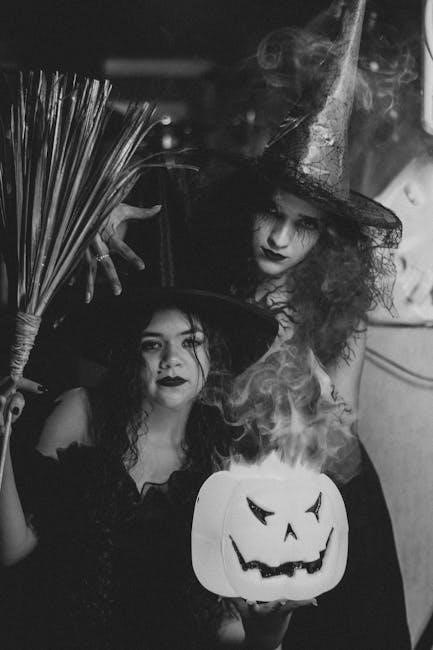
“Witchy style” represents a fascinating intersection of historical reclamation, personal expression, and contemporary aesthetics. It’s a visual language drawing inspiration from folklore, occult symbolism, and the natural world, evolving far beyond stereotypical depictions of pointed hats and broomsticks.
Modern witchy fashion often incorporates flowing silhouettes, natural fabrics like linen and velvet, and earthy tones – blacks, greens, browns, and deep reds. Jewelry featuring crystals, herbs, and celestial motifs are common accessories.
The aesthetic isn’t merely about clothing; it’s about embodying a connection to ancient wisdom and feminine power. It’s a deliberate rejection of mainstream fashion norms and a celebration of individuality. The phrase “Witchy Style and When to Take Your Clothes Off!” playfully suggests a liberation and comfort with one’s body and self-expression, embracing sensuality and freedom.