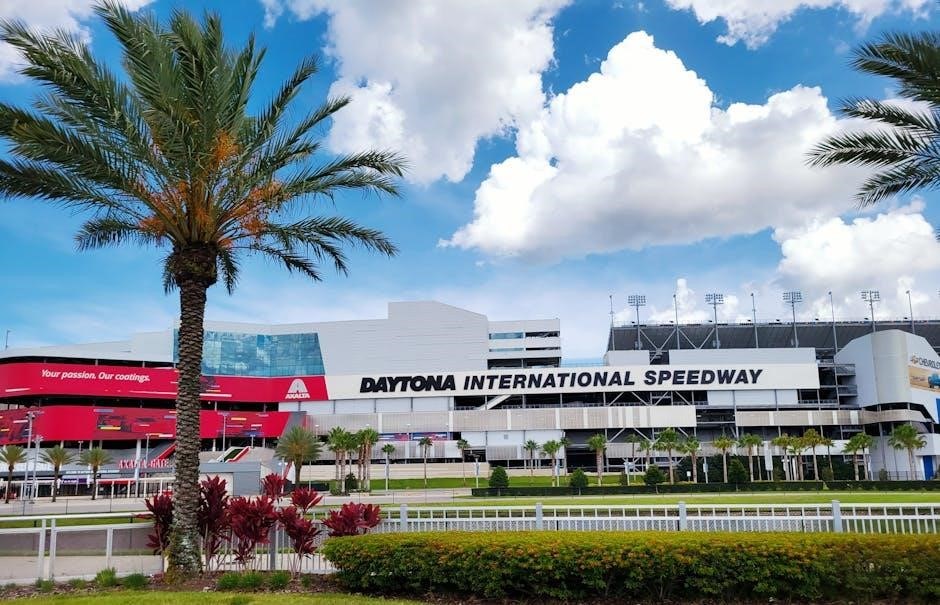
daytona beach tv guide

Daytona Beach TV Guide: Comprehensive Coverage (February 4, 2026)

Welcome to Daytona Beach’s premier television guide! Today, February 4th, 2026, marks the build-up to the iconic Daytona 500,
with extensive coverage planned across local and national networks. Discover comprehensive listings,
channel information, and streaming options for a complete viewing experience in the heart of Florida’s racing capital.

Daytona Beach television has a rich history, evolving alongside the city’s identity as a premier destination for motorsports and leisure. From its early days, local broadcasting has served as a vital link for residents and visitors, delivering news, weather, and entertainment. The area is uniquely positioned within the Central Florida media market, benefiting from a blend of local stations and strong network affiliations.

Today, viewers in Daytona Beach have access to a diverse range of programming options. Traditional over-the-air broadcasts are complemented by cable, satellite, and increasingly, streaming services. The upcoming Daytona 500 significantly impacts local television schedules, with dedicated coverage across multiple channels. Beyond motorsports, local news plays a crucial role, keeping the community informed about events and issues impacting their daily lives.

This guide aims to provide a comprehensive overview of the television landscape in Daytona Beach, offering insights into available channels, popular streaming platforms, and how to stay updated on the latest programming. Whether you’re a long-time resident or a first-time visitor, understanding the local TV options enhances your experience in this vibrant Florida city.

Local Channels & Networks Available

Daytona Beach and the surrounding Volusia County area are served by a robust selection of local television channels. Major network affiliates, including WFTV Channel 9 (ABC), WESH Newschannel 2, and WKMG-TV, provide comprehensive news, weather, and entertainment programming. Central Florida News 13 offers 24/7 local news coverage, a valuable resource for staying informed.

Public broadcasting is represented by WCEU TV 15 PBS, delivering educational and cultural content. Additionally, Univision Tv 26 (WVEN) caters to the Spanish-speaking community with news and entertainment programming. These stations not only broadcast local content but also carry national network feeds, offering a wide variety of shows and events.

Beyond these primary channels, several smaller local stations and networks contribute to the diverse television landscape. Access to these channels varies depending on your location and television service provider. The upcoming Daytona 500 will see increased local coverage, with special broadcasts and pre-race shows available on many of these networks.

National Network Affiliates in Daytona Beach

Daytona Beach residents enjoy access to all major national television networks through their local affiliates. ABC programming is readily available via WFTV Channel 9, offering popular shows, live sports, and national news broadcasts. NBC viewers can tune into WESH Newschannel 2 for similar content, including primetime dramas, comedies, and major sporting events.

CBS programming is broadcast through WKMG-TV, providing a diverse lineup of entertainment and news. For FOX viewers, access is also available through local providers carrying the network’s national feed. These affiliates ensure Daytona Beach viewers don’t miss out on nationally televised events, including the Super Bowl and other major broadcasts.

The week following the Super Bowl, February 4th, 2026, features the highly anticipated Daytona 500, which will receive extensive coverage across these national networks. Expect pre-race shows, live race coverage, and post-race analysis, bringing the excitement of NASCAR directly to Daytona Beach homes.

Cable Television Providers in Daytona Beach

Daytona Beach is primarily served by Spectrum (formerly Bright House Networks), the dominant cable provider offering a wide range of channel packages and services. Spectrum provides various tiers of service, including basic cable, expanded cable, and premium packages with access to HBO, Showtime, and other movie channels. They also bundle cable television with high-speed internet and phone services for added convenience and potential cost savings.

Spectrum’s channel lineup includes all major national networks – ABC, NBC, CBS, FOX – alongside numerous local channels and popular cable networks like ESPN, CNN, and the Disney Channel. Customers can customize their packages to suit their viewing preferences and budget. Interactive features, such as on-demand programming and a user-friendly channel guide, enhance the viewing experience.

While Spectrum is the primary provider, alternative cable options may be available in certain areas of Daytona Beach. Residents should compare packages and pricing to find the best fit for their needs, especially considering the upcoming Daytona 500 coverage and desired sports programming.

Satellite Television Options in Daytona Beach

For Daytona Beach residents seeking alternatives to cable, DIRECTV and DISH Network represent the primary satellite television providers. These services offer a broad selection of channels, often exceeding those available through cable, and are particularly appealing to viewers in areas where cable access is limited or unavailable. Both providers boast nationwide coverage, ensuring reliable signal reception throughout the Daytona Beach area.

DIRECTV is known for its exclusive programming, including NFL SUNDAY TICKET, a significant draw for sports enthusiasts, especially during the lead-up to and throughout the NASCAR season. DISH Network, conversely, often focuses on competitive pricing and innovative features like a voice-activated remote control. Both offer various package tiers, including options for local channels and premium movie networks.

Satellite television requires professional installation to ensure optimal signal strength. Consider the potential for weather-related disruptions, though modern satellite technology has significantly improved reliability. Comparing channel lineups, pricing, and promotional offers from both DIRECTV and DISH Network is crucial for making an informed decision.

Streaming Services Popular in Daytona Beach

Daytona Beach viewers are increasingly embracing the flexibility and affordability of streaming services. Netflix, Hulu, Amazon Prime Video, and Disney+ are among the most popular choices, offering vast libraries of on-demand movies and television shows. These platforms provide a compelling alternative to traditional cable and satellite television, allowing viewers to customize their entertainment experience.

For live sports coverage, particularly relevant with the Daytona 500 and NASCAR events, services like Peacock, Paramount+, and ESPN+ are gaining traction. These platforms often stream races and related programming that may not be available on traditional broadcast networks. Many viewers “cord-cut” and combine multiple streaming services to replicate a comprehensive channel lineup.

YouTube TV, Sling TV, and FuboTV offer live television packages, mimicking the cable experience with a selection of channels streamed over the internet. These services often include local channels, crucial for accessing local news and weather updates. High-speed internet access is essential for optimal streaming quality.

Daytona 500 Coverage on Local TV

Local Daytona Beach television stations are gearing up for extensive coverage of the 2026 Daytona 500, the “Great American Race.” WFTV Channel 9 (ABC), WESH Newschannel 2, and Central Florida News 13 are expected to provide comprehensive pre-race, live race, and post-race broadcasts. Expect in-depth analysis, driver interviews, and trackside reporting throughout the week leading up to the event.

Live race coverage will likely begin several hours before the green flag, with pre-race shows featuring expert commentary and behind-the-scenes access. Local news channels will offer frequent updates on traffic conditions and event logistics for attendees. Following the race, expect detailed recaps and analysis of the results.

WKMG-TV and other local affiliates will also contribute to the coverage, providing community-focused reports and highlighting the economic impact of the Daytona 500 on the region. Check local listings for specific broadcast times and special programming related to the race.

NASCAR Events & Television Schedules

Daytona International Speedway hosts numerous NASCAR events beyond the famed Daytona 500. Throughout 2026, viewers can anticipate coverage of the NASCAR Xfinity Series and NASCAR Craftsman Truck Series races, all broadcast on a combination of national and local networks.

National networks like FOX, NBC, and USA Network will carry the majority of these events, with streaming options available through platforms like Peacock. Local affiliates – WFTV, WESH, and News 13 – will often provide supplemental coverage, including pre- and post-race analysis and local driver spotlights.

Detailed television schedules are readily available on NASCAR’s official website (nascar.com) and through sports-specific websites like ESPN.com. Many TV listing websites and apps also offer customizable schedules based on your location and preferred channels. Remember to check listings closer to the event dates for any potential changes or updates.

Sports Programming on Daytona Beach TV

Beyond NASCAR, Daytona Beach television offers a diverse range of sports programming. National networks like ESPN, FS1, and CBS Sports are widely available through cable, satellite, and streaming services, delivering coverage of major league baseball, basketball, football, and college sports.

Local channels frequently broadcast high school sports events, providing a platform for emerging athletes and fostering community engagement. WFTV Channel 9 and WESH Newschannel 2 often feature local sports segments within their news broadcasts.


Streaming services such as ESPN+, Paramount+, and Peacock offer specialized sports packages, including live events, on-demand replays, and exclusive content. For fishing enthusiasts, given the area’s popularity for fishing tours, some local programming may occasionally feature related content. Viewers can find comprehensive sports schedules on network websites and dedicated sports apps, ensuring they don’t miss a moment of the action.

Local News Channels & Broadcast Times

Daytona Beach residents have access to several reliable local news channels providing up-to-date information on community events, weather, and breaking news. WFTV Channel 9 (ABC) delivers news at 6:00 AM, 12:00 PM, and 6:00 PM, with late-night broadcasts at 11:00 PM. WESH Newschannel 2 offers news coverage at similar times, focusing on Central Florida stories.

Central Florida News 13 is a 24/7 news source, providing continuous updates throughout the day and night. WKMG-TV also broadcasts local news, offering a different perspective on regional events. These channels utilize digital platforms, including websites and mobile apps, for live streaming and on-demand news clips.

Weather forecasts are integral to local news broadcasts, particularly important given Florida’s susceptibility to hurricanes and severe weather. Viewers can expect detailed weather reports during all major news segments, ensuring they are prepared for changing conditions. Regular updates are also available online and through weather apps.

Weather Forecasts on Daytona Beach Television

Daytona Beach television stations prioritize accurate and timely weather forecasts, crucial for residents and visitors alike, given the area’s vulnerability to coastal weather patterns. WFTV Channel 9 employs a dedicated meteorology team providing detailed forecasts, including hourly updates and long-range outlooks, during their news broadcasts.

WESH Newschannel 2 also features comprehensive weather coverage, utilizing advanced radar technology to track storms and provide real-time alerts. Central Florida News 13 offers continuous weather updates as part of its 24/7 news cycle, vital during hurricane season. WKMG-TV presents localized forecasts, focusing on specific areas within the Daytona Beach region.

Beyond traditional broadcasts, most stations offer interactive radar maps and weather apps, allowing viewers to monitor conditions independently. Special attention is given to beach conditions, including rip current risks and UV index levels. Expect frequent updates during severe weather events, ensuring public safety remains a top priority.

Daytona Beach Community Events on TV

Daytona Beach television stations actively promote local community events, fostering a strong connection with residents. WFTV Channel 9 and WESH Newschannel 2 regularly feature segments highlighting festivals, concerts, and charitable events happening throughout the area, often including interviews with organizers.

Central Florida News 13 dedicates portions of its local programming to showcasing community happenings, utilizing a calendar of events accessible both on-air and online. WKMG-TV frequently covers events at the Daytona International Speedway beyond NASCAR races, such as concerts and festivals held on the grounds.

Public service announcements (PSAs) are commonly aired, promoting local initiatives and non-profit organizations. Coverage extends to events along the 23 miles of beaches, fishing tournaments, and happenings in nearby Mims and Ormond Beach. Viewers can expect to find event listings and promotional spots integrated into local news broadcasts and community affairs programs.

Public Access Channels & Programming

Daytona Beach offers public access television channels, providing a platform for local voices and community-generated content. These channels empower residents to create and share programming reflecting diverse interests and perspectives. Typically, these channels feature meetings of local government bodies – city council, county commission – ensuring transparency and civic engagement.

Programming often includes coverage of school board meetings, local sports events not typically broadcast on major networks, and community forums addressing important local issues. Residents can submit their own video productions, ranging from short films and documentaries to educational programs and artistic showcases.

Access is generally facilitated through local cable providers like Bright House Networks (Spectrum), with designated channel slots and training resources available for aspiring producers. Public access channels serve as a vital resource for hyperlocal content, fostering a sense of community and providing a platform for underrepresented voices within Daytona Beach.

Spanish-Language Television Options

Daytona Beach residents have several options for accessing Spanish-language television programming. Univision Tv 26 (WVEN) is a key provider, offering a mix of news, entertainment, and sports content geared towards the Hispanic community. This channel delivers both locally produced segments and national programming from Univision’s extensive network.

Beyond traditional broadcast, many cable and satellite providers, including Bright House Networks (Spectrum), offer comprehensive Spanish-language packages. These packages typically include channels like Univision, Telemundo, and various international networks from Latin America and Spain, providing a diverse range of viewing choices.

Streaming services also play an increasingly important role, with platforms like Vix, Pluto TV, and others offering free or subscription-based access to Spanish-language content. These options cater to a growing demand for diverse programming and provide convenient access to news, telenovelas, and other popular shows for the Spanish-speaking population in the Daytona Beach area.

TV Listings Websites & Apps for Daytona Beach

Daytona Beach viewers have a wealth of digital resources to stay informed about television schedules. Several websites and mobile applications provide comprehensive and up-to-date listings for local and national channels. Popular options include TVGuide.com, Zap2it.com, and Fandango, which allow users to search by channel, time, or program title.

For a more personalized experience, apps like TitanTV and Yidio offer customized recommendations based on viewing preferences. These platforms often integrate with streaming services, enabling viewers to easily access their favorite shows and movies. Many local television stations, such as Channel 9 (WFTV) and WESH Newschannel 2, also maintain their own websites and apps with detailed program guides.

Furthermore, smart TV platforms and streaming devices often have built-in guide features. Utilizing these resources ensures Daytona Beach residents never miss a program, especially during major events like the Daytona 500, and can efficiently navigate the diverse television landscape.

Channel 9 (WFTV) ― ABC Programming

Channel 9 (WFTV), the local ABC affiliate serving Daytona Beach, delivers a robust programming schedule encompassing national ABC broadcasts and locally produced news and entertainment. On February 4th, 2026, viewers can expect the usual lineup of daytime talk shows, game shows, and ABC’s afternoon dramas. Primetime will feature popular series, potentially including previews or related content leading up to the Daytona 500 coverage planned for the following week.

WFTV is renowned for its comprehensive local news coverage, with broadcasts airing throughout the day, including morning, noon, evening, and late-night editions. Expect detailed reports on local events, traffic updates, and weather forecasts relevant to the Daytona Beach area. The station also provides extended coverage of breaking news and severe weather events.

Beyond news, Channel 9 offers community-focused programming and special events coverage. Check local listings for specific showtimes and details, as schedules are subject to change, particularly during major sporting events like NASCAR’s season opener.

WESH Newschannel 2 ― Local News & Coverage

WESH Newschannel 2 stands as a leading source for local news, weather, and sports in the Daytona Beach area. As a trusted news provider, WESH delivers comprehensive coverage throughout the day, including early morning news, midday updates, and in-depth evening broadcasts. On February 4th, 2026, expect detailed reporting on local happenings, community events, and any developments related to preparations for the upcoming Daytona 500.

The station’s commitment extends to investigative journalism, uncovering important stories impacting the Central Florida region. WESH also prioritizes severe weather coverage, providing crucial updates and safety information during storms or hazardous conditions. Their meteorology team offers detailed forecasts, helping residents stay informed and prepared.

Beyond news, WESH Newschannel 2 features local programming and community initiatives. Viewers can find information on local businesses, events, and opportunities to get involved. Check their website or local listings for a complete schedule and to access live streams of their broadcasts.

Central Florida News 13 ― 24/7 News Source

Central Florida News 13 provides continuous, around-the-clock news coverage for the Daytona Beach region and beyond. As a 24/7 news source, viewers can rely on News 13 for breaking news alerts, live video streams, and up-to-the-minute information on critical events. On February 4th, 2026, anticipate extensive coverage leading up to the Daytona 500, including traffic updates, race previews, and interviews with drivers and teams.

The station’s dedicated team of reporters and anchors delivers in-depth reporting on local politics, crime, education, and human-interest stories. News 13 also maintains a strong focus on weather, offering detailed forecasts and tracking severe weather systems as they approach Central Florida. Their interactive radar and weather app provide real-time updates and alerts.

Accessible through cable, satellite, and online streaming platforms, Central Florida News 13 ensures residents stay informed regardless of their preferred viewing method. Visit their website for live streams, on-demand video clips, and breaking news notifications.

WCEU TV 15 PBS ― Educational Programming

WCEU TV 15 PBS serves as Central Florida’s premier provider of educational television, offering a diverse lineup of programs for viewers of all ages in the Daytona Beach area. As a Public Broadcasting Service affiliate, WCEU is committed to enriching the community through informative and engaging content. On February 4th, 2026, expect a blend of nationally syndicated PBS shows and locally produced educational segments.

Programming includes children’s shows designed to foster early learning, documentaries exploring science, history, and culture, and public affairs programs addressing important community issues. WCEU also broadcasts arts and performance programming, showcasing the talents of local artists and performers.

Beyond traditional broadcast, WCEU TV 15 PBS offers educational resources online, including lesson plans for teachers and interactive content for students. The station’s commitment to lifelong learning makes it a valuable asset to the Daytona Beach community. Access is available via antenna, cable, and streaming services.

WKMg-TV ౼ Local News and Entertainment

WKMg-TV is a leading source for local news, weather, and entertainment in the Daytona Beach area. As a key television station serving Central Florida, WKMg-TV provides comprehensive coverage of events impacting the community, with a strong focus on the Volusia County region. On February 4th, 2026, viewers can anticipate in-depth reporting on the preparations for the upcoming Daytona 500, including traffic updates and race-related news.

Beyond news, WKMg-TV offers a variety of entertainment programming, including syndicated talk shows, game shows, and local lifestyle segments. The station’s commitment to community involvement is evident in its coverage of local events and its support for local organizations.

WKMg-TV’s dedicated weather team provides accurate and timely forecasts, keeping residents informed about changing conditions. The station’s website and mobile app offer additional resources, including live streams and interactive radar maps. Stay connected with Daytona Beach through WKMg-TV!

Univision Tv 26 (WVEN) ౼ Spanish-Language News

Univision Tv 26 (WVEN) serves as the primary Spanish-language television station for the Daytona Beach and Central Florida communities. Offering a vital connection for Spanish-speaking residents, WVEN delivers a comprehensive range of news, entertainment, and informational programming. On February 4th, 2026, the station will provide crucial updates on local events, alongside national and international news tailored to its audience.

WVEN’s news broadcasts cover local stories impacting the Hispanic community, including education, health, and community initiatives. Viewers can expect detailed coverage of the Daytona 500, presented with a cultural perspective relevant to Spanish-speaking fans.

Beyond news, Univision Tv 26 broadcasts popular telenovelas, variety shows, and sports programming. The station’s website and digital platforms offer streaming options and additional content. WVEN is a cornerstone of information and entertainment for the growing Hispanic population in the Daytona Beach area, fostering a sense of community and connection.

Bright House Networks (Spectrum) Channel Lineup

Bright House Networks, now operating as Spectrum, remains a dominant cable television provider in the Daytona Beach area. As of February 4th, 2026, Spectrum offers a tiered channel lineup catering to diverse viewing preferences. Basic packages include local channels – WFTV (Channel 9), WESH (Channel 2), and Central Florida News 13 – alongside popular national networks like ABC, NBC, CBS, and FOX.

Expanded packages add sports networks (ESPN, FS1), entertainment channels (HBO, Showtime), and premium movie channels. Spectrum also provides access to Univision Tv 26 (WVEN) for Spanish-language programming. Digital packages include on-demand services and streaming app integration.

Customers can customize their channel selections based on their interests. Spectrum’s website provides a detailed channel guide, allowing viewers to easily find their favorite programs. Installation and customer support are readily available. For the most up-to-date channel lineup and pricing information, visit the official Spectrum website or contact a local representative in Daytona Beach.

Daytona Beach Television History & Evolution

Daytona Beach’s television history mirrors the national evolution, beginning with the introduction of analog broadcasting in the late 1950s. Early stations, serving the Central Florida region, brought limited programming to local viewers. The opening of Daytona International Speedway in 1959 significantly impacted local television, driving demand for sports coverage and establishing a connection between motorsports and the medium.

The arrival of cable television in the 1970s and 80s, spearheaded by companies like Bright House Networks (now Spectrum), expanded channel options and improved signal quality. The digital transition in the 2000s further enhanced viewing experiences. Today, Daytona Beach benefits from a robust mix of local affiliates – WFTV, WESH, News 13 – and national networks.

The recent surge in streaming services represents the latest chapter, offering viewers unprecedented control and access to content. Despite these changes, local television remains vital, particularly for news, weather, and coverage of events like the Daytona 500, solidifying its place in the community.

Future Trends in Daytona Beach TV Viewing

Daytona Beach television is poised for significant evolution, driven by technological advancements and shifting consumer habits. The continued growth of streaming services will likely dominate, with platforms offering personalized content and on-demand viewing experiences. Expect increased integration of smart TV features and voice control, enhancing user convenience.

However, traditional broadcasting isn’t disappearing. Local channels like WFTV, WESH, and News 13 will adapt by strengthening their digital presence, offering live streams, and interactive content. Hyperlocal news and community programming will remain crucial differentiators. The demand for live sports coverage, particularly NASCAR events like the Daytona 500, will ensure continued viewership of live television.

Furthermore, the rise of 5G technology promises faster internet speeds, supporting higher-quality streaming and potentially enabling new augmented reality (AR) experiences integrated with television broadcasts. Ultimately, the future of Daytona Beach TV viewing will be a hybrid model, blending traditional and digital platforms.

Resources for Finding TV Schedules

Staying informed about television schedules in Daytona Beach is easier than ever, thanks to a wealth of online resources. Several websites and applications specialize in providing comprehensive TV listings, allowing viewers to plan their viewing experiences effectively. Popular options include dedicated TV guide websites offering searchable schedules by channel, time, and program title.

Many local television stations, such as WFTV Channel 9, WESH Newschannel 2, and Central Florida News 13, maintain updated schedules on their official websites. These often include detailed program descriptions and information about live events, including NASCAR coverage. Streaming service providers also offer integrated program guides within their platforms.

Furthermore, mobile apps for TV listings are readily available for both iOS and Android devices, providing convenient access to schedules on the go. Utilizing these resources ensures you won’t miss your favorite shows or important local news broadcasts in the Daytona Beach area.

computer power and human reason: from judgment to calculation pdf

The digital age fundamentally alters how we reason, transitioning from intuitive, experience-based judgement to systems reliant on computational power and algorithmic precision.

The Core Argument of “Computer Power and Human Reason”

Joseph Weizenbaum’s seminal work posits a critical tension between the increasing reliance on computers and the potential erosion of essential human reasoning capabilities. He doesn’t argue against computational power itself, but rather cautions against the uncritical acceptance of computers as objective arbiters of complex situations traditionally handled by human judgement.

The central claim revolves around the idea that computation, by its very nature, excels at quantifiable problems, while many crucial human concerns – ethical dilemmas, nuanced interpretations, and contextual understanding – resist easy formalization.

Weizenbaum warns that the delegation of judgement to machines can lead to a diminished capacity for critical thinking and moral responsibility, fostering a dangerous dependence on technological solutions without fully considering their implications. He advocates for a mindful approach, recognizing the limitations of computation and preserving the value of human wisdom.

Historical Context: Pre-Digital Judgement

Before the advent of computers, human judgement reigned supreme in navigating complexity. Decisions, particularly in fields like law, medicine, and governance, were rooted in accumulated experience, contextual understanding, and often, subjective interpretation. This wasn’t necessarily chaotic; rather, it operated within established frameworks of ethics, precedent, and professional norms.

Expertise was cultivated through years of apprenticeship and practical application, emphasizing the development of ‘practical wisdom’ – the ability to apply general principles to specific, often ambiguous, situations.

While not immune to bias or inconsistency, this system prioritized nuanced assessment and considered the human element. Formal rules existed, but their application demanded interpretation and discretion. The pre-digital world valued the art of judgement, recognizing its inherent limitations but also its irreplaceable role in a complex society.

Thesis Statement: From Qualitative Judgement to Quantitative Calculation

This work argues that the increasing reliance on computer power represents a profound shift from a mode of reasoning centered on qualitative judgement – informed by experience, context, and ethical considerations – to one dominated by quantitative calculation and algorithmic processing.

This transition isn’t simply about efficiency; it fundamentally alters the nature of reason itself. While offering the promise of objectivity and precision, the prioritization of calculation risks diminishing the importance of nuanced understanding, contextual awareness, and human values in decision-making processes.

Furthermore, the apparent neutrality of algorithms masks inherent biases embedded within data and design, potentially exacerbating existing inequalities. Therefore, a critical examination of this shift is crucial to ensure that computational power augments, rather than supplants, essential human reasoning capabilities.

II. The Nature of Judgement Before Computation

Prior to widespread computing, human judgement relied heavily on practical wisdom, accumulated experience, and an understanding of specific contexts and situational nuances.

Aristotelian Phronesis: Practical Wisdom

Aristotle’s concept of phronesis, often translated as practical wisdom, is central to understanding pre-computational judgement. It wasn’t simply theoretical knowledge (episteme) but the ability to deliberate well about what is good and right in particular circumstances.

Phronesis involved a nuanced grasp of context, recognizing that universal rules often require adaptation. It demanded experience – learning from past actions and their consequences – and a moral character attuned to virtuous behavior.

Crucially, phronesis wasn’t about applying a formula; it was a dynamic, iterative process of assessment and response. A skilled judge, in the Aristotelian sense, understood the limitations of abstract principles and prioritized the specific details of each case. This contrasts sharply with the rule-based logic that underpins much of modern computation, highlighting a fundamental shift in how we approach decision-making.

The Role of Experience and Context in Judgement

Before the prevalence of computational tools, human judgement thrived on accumulated experience and a deep understanding of context. Decisions weren’t made in a vacuum; they were informed by a lifetime of observations, interactions, and tacit knowledge.

Context was paramount. A skilled artisan, for example, didn’t simply follow instructions; they adjusted their technique based on the material, the environment, and the desired outcome. Similarly, a seasoned judge considered the unique circumstances of each case, recognizing that identical rules could demand different responses.

This reliance on experience fostered a holistic approach to problem-solving, acknowledging the inherent complexity and ambiguity of real-world situations. It allowed for flexibility and adaptation, qualities often lacking in rigid, algorithmic systems. The weight given to precedent, while establishing consistency, always acknowledged the nuances of individual cases.

Limitations of Pre-Computational Judgement: Bias & Inconsistency

Despite its strengths, pre-computational judgement wasn’t without flaws. Human cognition is susceptible to a range of biases – cognitive shortcuts that, while often helpful, can lead to systematic errors in reasoning. Confirmation bias, for instance, encourages us to seek out information confirming existing beliefs, while anchoring bias causes us to over-rely on initial information.

Furthermore, consistency was often elusive. Judgements could vary depending on the decision-maker’s mood, fatigue, or personal predispositions. The lack of standardized procedures meant that similar cases could receive disparate treatment, undermining fairness and predictability.

Subjectivity was inherent, and while experience was valued, it didn’t guarantee objectivity. The very qualities that made human judgement adaptable – its sensitivity to context – also opened the door to inconsistencies and the influence of irrelevant factors. This created a demand for more reliable, standardized methods.

III. The Rise of Calculation and the Promise of Objectivity

The pursuit of objectivity fueled the shift towards calculation, promising rational, unbiased decisions through formalized systems and the automation of complex processes.

The Enlightenment and the Emphasis on Rationality

The 18th-century Enlightenment profoundly reshaped Western thought, prioritizing reason and empirical observation as the primary paths to knowledge and progress. This intellectual movement challenged traditional sources of authority – faith, tradition, and aristocratic privilege – advocating instead for individual autonomy and the power of human intellect. Philosophers like Immanuel Kant championed the idea of universal reason, suggesting that all rational beings share the same fundamental cognitive structures.

This emphasis on rationality extended beyond philosophical inquiry, influencing legal systems, political structures, and scientific methodologies. The desire to create a more just and equitable society led to calls for codified laws based on rational principles, rather than arbitrary decrees. Simultaneously, the scientific revolution, with its focus on observation, experimentation, and mathematical analysis, demonstrated the power of reason to unlock the secrets of the natural world. This cultural climate laid the groundwork for the later development of formal logic and, ultimately, the computational technologies that would further amplify the reach of calculation.

The Development of Formal Logic and Mathematics

The 19th century witnessed crucial advancements in formal logic and mathematics, providing the theoretical foundations for modern computation. George Boole’s development of Boolean algebra, in 1854, was particularly pivotal, introducing a system of logic based on binary values (true/false, 1/0). This allowed logical statements to be expressed as mathematical equations, opening the door to mechanization.

Simultaneously, mathematicians like Gottlob Frege further formalized logic, creating predicate calculus and establishing a more rigorous framework for mathematical reasoning. Bertrand Russell and Alfred North Whitehead’s Principia Mathematica (1910-1913) attempted to derive all mathematical truths from logical axioms, showcasing the power of formal systems. These developments weren’t merely abstract exercises; they provided the essential tools for representing knowledge and performing calculations in a precise, unambiguous manner – qualities that would become central to the design of computers and algorithms. The pursuit of axiomatic systems and formal proofs directly enabled the possibility of automating reasoning processes.

Early Computing Machines: Automating Calculation

Before the electronic computer, mechanical devices aimed to automate calculation, driven by the desire to reduce errors and increase efficiency. Charles Babbage’s Difference Engine (early 19th century) and Analytical Engine (designed but never fully built) represent foundational concepts. The Difference Engine automated polynomial calculations, while the Analytical Engine envisioned a general-purpose programmable computer.

Ada Lovelace, recognizing the Analytical Engine’s potential beyond mere calculation, is considered the first computer programmer for her notes on an algorithm to compute Bernoulli numbers. Later, Herman Hollerith’s tabulating machine, using punched cards, dramatically sped up the 1890 US Census. These machines, though limited by their mechanical nature, demonstrated the feasibility of automating complex calculations. They shifted the focus from human calculation to machine execution, foreshadowing the profound impact computers would have on intellectual work and the very nature of reason itself. These early efforts laid the groundwork for the digital revolution.

IV. The Impact of Computers on Professional Judgement

Computers increasingly influence professional fields, offering tools for data analysis and decision-making, yet simultaneously reshaping the role of human expertise and intuition.

Law and the Codification of Rules

The legal profession has witnessed a significant shift towards the codification of rules and regulations, a process greatly accelerated by computational capabilities. Historically, legal reasoning relied heavily on precedent, interpretation, and nuanced understanding of context – areas where human judgement reigned supreme. However, the desire for predictability, efficiency, and reduced bias has fueled the development of legal databases, expert systems, and increasingly, algorithms designed to assist in legal research, contract analysis, and even predictive policing.

This trend isn’t without its challenges. Translating complex legal principles into formal, computable rules often necessitates simplification, potentially sacrificing crucial contextual details. Furthermore, the reliance on coded rules can lead to unintended consequences and exacerbate existing inequalities if the underlying data or algorithms reflect societal biases. The question becomes not simply whether computers can perform legal tasks, but whether they should, and under what safeguards to ensure fairness and justice are preserved.

Medicine and the Rise of Diagnostic Algorithms

The field of medicine is rapidly integrating computational tools, particularly in the realm of diagnosis. Traditionally, a physician’s diagnosis stemmed from a holistic assessment – patient history, physical examination, intuition, and years of experience. Now, diagnostic algorithms, powered by machine learning and vast datasets of medical records, are increasingly employed to identify patterns and predict potential illnesses.

These algorithms excel at processing complex information and detecting subtle anomalies often missed by the human eye. They offer the promise of earlier and more accurate diagnoses, personalized treatment plans, and reduced medical errors. However, concerns remain regarding over-reliance on these systems. The “black box” nature of some algorithms can obscure the reasoning behind a diagnosis, hindering a physician’s ability to critically evaluate the results. Maintaining the crucial human element – empathy, contextual understanding, and the ability to address the unique needs of each patient – remains paramount.

Finance and the Algorithmic Trading Revolution

The financial sector has been at the forefront of adopting algorithmic decision-making, most notably through high-frequency and algorithmic trading. Where once human traders relied on market intuition, experience, and fundamental analysis, now complex algorithms execute trades at speeds and volumes impossible for humans to match.

These algorithms identify and exploit minute price discrepancies, capitalizing on market inefficiencies. This has led to increased market liquidity and reduced transaction costs, but also introduces new risks. “Flash crashes” – sudden, dramatic market declines – have been attributed to algorithmic trading gone awry, highlighting the potential for systemic instability. The reliance on quantitative models can also create vulnerabilities, as algorithms may not adequately account for unforeseen events or “black swan” occurrences. The question arises: has the pursuit of optimized calculation eclipsed sound financial judgement and risk assessment?

V. The Illusion of Neutrality: Algorithms and Bias

Despite appearing objective, algorithms inherit and amplify existing societal biases present within the data they are trained on, leading to unfair or discriminatory outcomes.

Data Bias and its Consequences

Data bias manifests in numerous forms, stemming from historical prejudices, underrepresentation of certain demographics, or flawed data collection processes. This isn’t merely a technical glitch; it’s a reflection of systemic inequalities embedded within the information used to train algorithms.

Consequently, biased data leads to skewed results. For example, facial recognition software historically performed poorly on individuals with darker skin tones due to a lack of diverse training data. Similarly, predictive policing algorithms, trained on biased arrest records, can perpetuate discriminatory practices by disproportionately targeting specific communities.

The consequences extend beyond simple inaccuracy. Biased algorithms can deny opportunities – loan applications, job prospects, even fair legal sentencing – reinforcing existing societal disadvantages. Addressing data bias requires careful scrutiny of data sources, proactive efforts to ensure representation, and ongoing monitoring for discriminatory outcomes. Ignoring this issue undermines the promise of algorithmic fairness and exacerbates existing inequalities.

Algorithmic Accountability and Transparency

Establishing algorithmic accountability is paramount in an age increasingly governed by automated decision-making. This necessitates clear lines of responsibility when algorithms produce harmful or unfair outcomes. Who is accountable when a self-driving car causes an accident, or a loan application is unjustly denied?

Transparency is a crucial component of accountability. Understanding how an algorithm arrives at a particular decision – its underlying logic and the data it utilizes – is essential for identifying and rectifying biases. However, many algorithms, particularly those employing deep learning, are notoriously opaque, creating a “black box” effect.

Demanding explainable AI (XAI) and advocating for open-source algorithms where feasible are vital steps. Regulatory frameworks are also needed to enforce audits, require impact assessments, and establish mechanisms for redress when algorithmic harms occur. Without accountability and transparency, algorithms risk becoming instruments of unchecked power and injustice.

The Problem of “Black Box” Algorithms

“Black box” algorithms, particularly those utilizing deep learning neural networks, present a significant challenge to understanding and controlling their outputs. Their complexity makes it incredibly difficult, even for their creators, to fully decipher the reasoning behind specific decisions.

This opacity hinders accountability and fuels distrust. If we cannot understand why an algorithm made a particular choice, how can we assess its fairness, identify biases, or correct errors? The lack of interpretability also makes it challenging to ensure these systems align with ethical principles and legal requirements.

The inherent nature of these algorithms – learning from vast datasets through complex, non-linear transformations – contributes to this “black box” effect. While they may achieve impressive accuracy, their internal workings remain largely inscrutable. Addressing this requires research into XAI techniques and a willingness to prioritize interpretability alongside performance, even if it means sacrificing some predictive power.

VI. Reconciling Calculation and Judgement: A Hybrid Approach

Effective decision-making necessitates blending computational analysis with uniquely human qualities – intuition, ethics, and contextual understanding – for optimal outcomes.

The Importance of Human Oversight

While algorithms excel at processing data and identifying patterns, they fundamentally lack the nuanced understanding of context, ethics, and unforeseen consequences that characterize human judgement. Therefore, human oversight isn’t merely a safeguard, but a crucial component of responsible implementation. This oversight demands more than simply reviewing outputs; it requires a deep comprehension of the algorithm’s underlying assumptions, potential biases embedded within the training data, and the broader societal implications of its decisions.

Effective oversight involves establishing clear lines of accountability, empowering individuals to question algorithmic recommendations, and fostering a culture of critical evaluation. It’s about recognizing that algorithms are tools, not replacements for human reasoning. Furthermore, human experts are essential for handling edge cases – situations falling outside the algorithm’s training parameters – and for adapting systems to evolving circumstances. Ignoring this vital element risks perpetuating errors, exacerbating inequalities, and eroding trust in automated systems.

Developing “Human-in-the-Loop” Systems

“Human-in-the-loop” (HITL) systems represent a pragmatic approach to integrating computational power with human reason, acknowledging the strengths and weaknesses of both. These systems aren’t about fully automated decision-making, but rather collaborative processes where algorithms propose solutions, and humans provide critical evaluation, contextual understanding, and ethical considerations.

HITL design necessitates intuitive interfaces allowing seamless interaction between humans and algorithms. Crucially, the system must clearly articulate the rationale behind algorithmic suggestions, enabling informed human assessment. Different levels of human involvement are possible – from simple approval/disapproval to active refinement of algorithmic parameters. Effective HITL requires careful consideration of task allocation, ensuring humans focus on areas demanding creativity, empathy, and complex reasoning, while algorithms handle repetitive, data-intensive tasks. Ultimately, HITL aims to augment human capabilities, not diminish them, fostering a synergistic relationship between intelligence and computation.

The Future of Reason: Augmentation, Not Replacement

The trajectory of reason isn’t towards replacing human judgement with artificial intelligence, but towards its powerful augmentation. Viewing computers as tools to enhance, rather than supplant, our cognitive abilities is paramount. This future envisions a symbiotic relationship where computational power handles complex data analysis and pattern recognition, freeing human intellect for higher-order thinking – critical evaluation, ethical deliberation, and innovative problem-solving.

Educational systems must adapt, emphasizing skills computers cannot easily replicate: nuanced communication, emotional intelligence, and creative synthesis. The focus shifts from rote memorization to cultivating critical thinking and adaptability. Furthermore, ongoing research into explainable AI (XAI) is vital, ensuring algorithmic processes are transparent and understandable to human users. The goal isn’t simply more efficient calculation, but a more informed, ethical, and ultimately, human form of reasoning, empowered by technology.